Dental implants are a well-established solution for those seeking to replace missing teeth and restore their smile. Unlike dentures or bridges, dental implants are a long-lasting and durable option that mimics the look and function of natural teeth.
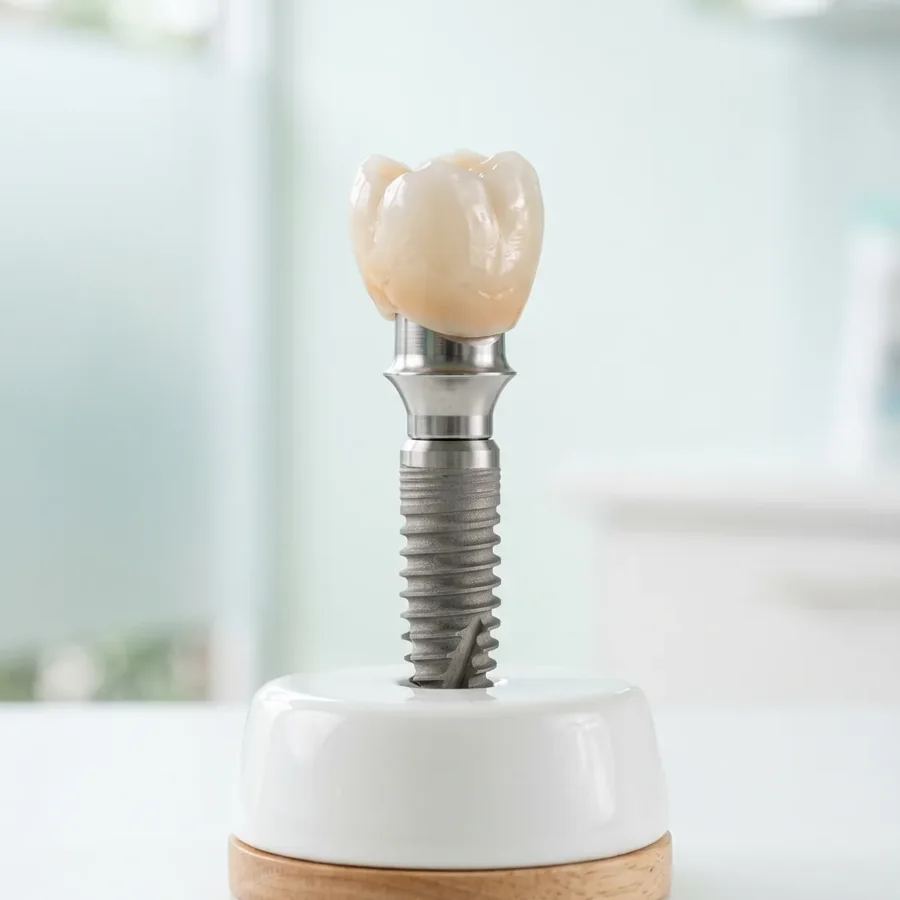
They involve surgically placing a titanium post into the jawbone, which then acts as a stable anchor for the artificial tooth. This process not only ensures a secure fit but also helps in preserving the jawbone structure, preventing the bone loss that can occur with missing teeth.
What Are Dental Implants?
Dental implants are artificial tooth roots made from titanium that are surgically placed into your jawbone. They serve as a strong foundation for fixed or removable replacement teeth. This provides a natural-looking and long-lasting solution to replace missing teeth.
They are designed to blend seamlessly with your natural teeth, ensuring a comfortable and aesthetically pleasing result.
Benefits of Dental Implants:
- Improved Appearance: Dental implants look and feel like your own teeth. Because they are designed to fuse with bone, they become a stable, long-lasting part of your smile, providing a natural look and feel to your smile.
- Enhanced Speech: Unlike poor-fitting dentures, dental implants won’t slip into your mouth, which can cause you to mumble or slur your words. They help you speak without worry.
- Increased Comfort: Since dental implants become part of you, they eliminate the discomfort of removable dentures. They offer the same stability and strength as natural teeth, making them very comfortable.
- Easier Eating: fitting dentures can be a real drag when enjoying your meals. Dental implants act just like natural teeth, unlike dentures that slip and slide. This means you can savour all your favourite foods confidently and ditch the discomfort!
- Improved Self-Esteem: Dental implants can restore your smile, helping you feel better about yourself. They provide a natural, beautiful appearance, boosting your self-confidence and quality of life.
Process of Getting Dental Implants:
The procedure for receiving dental implants typically involves several steps, ensuring a customized and effective solution for each patient:
- Initial Consultation and Examination: The process begins with a thorough dental examination, including X-rays and 3D imaging. This helps your dentist assess the condition of your jawbone and develop a personalized treatment plan. Discussing your medical history and any medications you are taking is also crucial at this stage.
- Tooth Extraction (if needed): If the damaged tooth is still present and requires removal, your dentist will extract it. If conditions permit, this can usually be performed during the same appointment as the implant placement.
- Bone Grafting (if necessary): In cases where the jawbone is not thick enough or too soft, a bone graft may be required to provide a solid foundation for the implant. This step ensures that the implant can effectively support the dental crown. The bone graft might need several months to heal before implant placement.
- Implant Placement: During this surgical procedure, a titanium post is inserted into your jawbone. This serves as the new tooth root. The implant is placed below the gum line, allowing the gum tissue to be sutured over the implant.
- Osseointegration: Over the next few months, the jawbone grows around the implant in osseointegration. This period is crucial for the implant to securely anchor within the bone, ensuring stability for the replacement tooth.
- Abutment Placement: After the implant fully bonds with your jawbone (osseointegration), a short procedure might be needed to attach a small connector piece (abutment) to the implant. The abutment acts as a connector, protruding above the gum line, and supports the final crown.
- Crown Placement: A custom-made crown blends seamlessly with your natural teeth after the gums heal. This crown is then attached to the abutment, completing the implant process. Your dentist will ensure that the colour, shape, and size match your surrounding teeth for a natural-looking smile.
Aftercare for Dental Implants:
Proper aftercare is essential to ensure the longevity and success of your dental implants. Here are some crucial steps to follow for effective implant care:
- Maintain Good Oral Hygiene: Keeping your mouth clean is vital. Brush your teeth at least twice daily and floss daily to remove food particles and plaque. Use a soft-bristled toothbrush and an antimicrobial mouthwash to help prevent infection around the implant site.
- Regular Dental Check-ups: Schedule regular check-ups with your dentist for professional cleanings and examinations. During regular checkups, your dentist will keep an eye on your implants to make sure they’re working well.
- Go Easy on Hard Bites: Dental implants are tough, but tough foods like ice, candy, or nuts can chip them or damage nearby teeth. It’s best to enjoy these treats in moderation.
- Quit Smoking: Smokers may experience slower healing and a higher chance of implant rejection. If you smoke, consider quitting to improve your overall oral health and the longevity of your implants.
- Wear a Night Guard (if necessary): If you grind your teeth at night, your dentist may recommend wearing a night guard to protect your implants and natural teeth from undue stress and potential damage.
- Monitor for Signs of Trouble: Watch for any signs of complications, such as persistent pain, swelling, or infection around the implant site. If you experience any of these symptoms, contact your dentist immediately for a check-up.
By adhering to these aftercare guidelines, you can help ensure the long-term success of your dental implants, maintaining a healthy and beautiful smile for years to come.
Take the Next Step Toward a Healthier Smile
Ready to enhance your smile with dental implants in Barrie, ON? Visit our dental clinic in Barrie, ON, and experience exceptional care and personalized treatment. Contact Yonge Forest Dental today to schedule your consultation and start your journey toward a confident, radiant smile.
How to Know If You Might Be a Good Candidate
Not everyone arrives at the same starting point, and that is exactly why an in-person assessment matters. When we look at whether dental implants are a sensible option for you, we weigh a few different factors rather than any single one. The goal is to understand your overall picture so we can recommend something that fits.
- Bone health. An implant needs enough healthy jawbone to anchor into. If some bone has been lost after a missing tooth, a bone graft can sometimes help rebuild the area first.
- Gum health. Firm, healthy gums support long-term results. Active gum disease is usually treated before moving ahead.
- General health. Conditions such as uncontrolled diabetes, along with smoking, can affect healing. Sharing your full medical history helps us plan around these factors.
If one of these areas needs attention first, that does not necessarily rule you out. In many cases it simply means an extra preparatory step. Dr. Doowon Joo and Dr. Jessica Sze Wan Chau can review your situation and talk through what makes sense for you.
Implants Compared With Bridges and Dentures
Implants are one way to replace missing teeth, but they are not the only way. Bridges and dentures have helped patients for generations, and each option has its place depending on your needs, your budget, and the condition of the surrounding teeth.
- Dental implants stand on their own in the jaw, so neighbouring teeth are left untouched. They are designed to feel and function much like a natural tooth and can last many years with good care.
- Bridges rely on the teeth on either side of a gap for support, which means those teeth are reshaped to hold the bridge in place. They are often quicker to complete than implants.
- Dentures are removable and can replace several teeth or a full arch at once. They are frequently the most affordable route, though some patients find they take time to adjust to.
There is no single answer that suits everyone. The right choice depends on your mouth and your priorities, which is something we can walk through together at a consultation.
Common Myths, Corrected
A lot of what people believe about implants comes from outdated information or a friend's second-hand story. Here are a few ideas worth clearing up.
- "Implants are only for older adults." Adults of many ages consider implants once the jaw has finished growing. Suitability depends on your health, not simply your age.
- "The procedure is unbearable." Treatment is carried out with local anaesthetic, and many patients report the experience is more manageable than they expected. We take time to keep you comfortable throughout.
- "Once it's in, you never have to think about it." Implants still need daily brushing, flossing, and regular checkups. Looking after them well is what helps them serve you over the long term.
Daily Life and Eating After Healing
Once an implant has fully healed and the final crown is in place, most patients find it settles into the background of everyday life. You brush and floss around it the way you would a natural tooth, and there is no special routine to memorize beyond keeping up with good habits.
Eating tends to feel natural again as well. Because the implant is anchored in the jaw, it can handle a wide range of foods, from crisp apples to a proper steak, without the shifting some people associate with removable options. During the earliest healing phase we may suggest sticking to softer foods, but that is temporary. Many patients tell us the biggest change is simply not having to think about the gap anymore.
Common Questions About Dental Implants
How long does the whole implant process take?
It varies from person to person. Because the implant needs time to fuse with the bone, the full journey often spans several months from placement to final crown. We will give you a clearer timeline once we have assessed your situation.
Will an implant look like my other teeth?
The crown that sits on top is designed to match the shape and shade of your surrounding teeth, so it can blend in naturally when you smile.
How do I care for an implant?
Brush and floss around it daily and keep up with routine dental visits. Good care at home is a big part of helping an implant last many years.
How do I book a consultation?
You can request an appointment online through our appointment request page or call us at 249-888-2001. We are happy to answer your questions and see whether implants are a good fit for you.